2025: In the midst of my small business´s third year I´m getting a much clearer picture of a preferrable direction also from exhibiting my designs and getting a feedback from what customers buy. It´s policy is formed and a clearer idea of how much to produce in order to maintain a fresh image and not stock up. I gave up Shopify for Square Weebly´s commercial site as I am not producing a whole bunch but creating single (or four items at most!) items. I have even found a definition from the garment industry of how many garment´s a season´s collection consists of, an object I can easily fulfill on my time. Slow fashion and sustainability based on historical resources have actally come out of this enterprize! So this summer II skipped visiting the Textile Center at Blönduós as other exhibition opportunities presented themaselves in addition to adminastrive responsabilities in the field itself.
Exhibitions 2025: Skúmaskot, Skólavörðustiíg, apríl, Kirsuberjartréð, Vesturgötu, august,, Ljósanótt, The cultural Night of Reykjanesbaer sept.?
2024: Back at The Textile Center at Blöndós, Iceland working on the third step in Vera Designs´ self sufficient productions, wovens. A skirt and bags were made from last year´s excess yarn of the scarve creation. A great contribution to the idea of self-sufficiency in the firm was discovered this winter as the wool, the firm´s products ingredient has been OEKO-TEX 100 manifested . That means that Vera's designs are both self-sufficient and environmental friendly. Still a lot of things to consider such as the quantity of yarn used since there seems to be no garantee that equal amount of rows woven will give the same outcome in cm. I promised myself to count the rows I wove properly next time as there was a mismatch at the seams in my last year's skirt and an personal understanding emerging in the necessity of a bigger looms that can cover both sides of the garment sideways . I might try the bigger loom next time.
Exhibitions: Skúmaskot, Skólavörðustígur, Rvk., apríl; Kirsuberjartréð, Vesturgöta, Rvk.; Ljósanótt, cultural Night of Reykjanesbaer, sept .; Handverk & Hönnun, The City Council of Reykjavik, november..
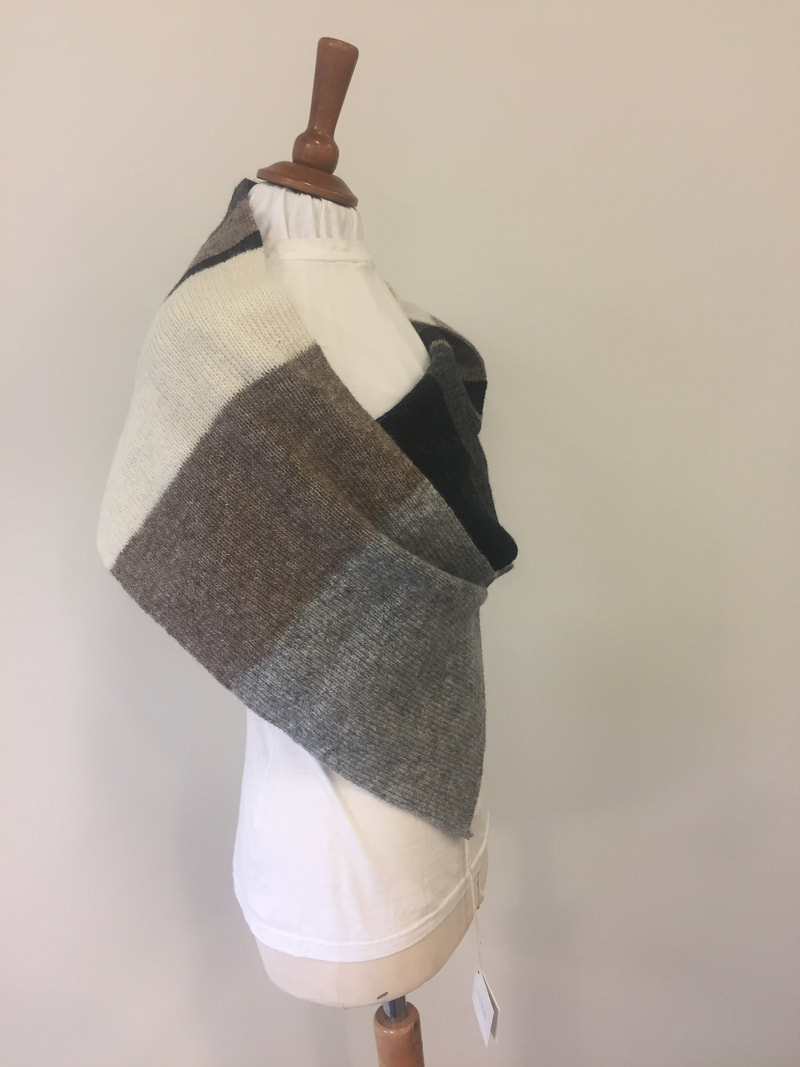
2023: Another couple of years have passed since last having time to review my homepage. Founded a firm built on ideas of sustainability working with icelandic textile and fashion March 23 called VERA DESIGN. My angora experiments seen in the ,,Let it snow`` scarf on My designs page here above gave way to a successful drapery in wool too with the outcome of rib and fairisle knit scarves in eingirni (single ply yarn spun wool).´The firm´s sustainability lies in reproducing from unsold stock, create more designs such as sweaters, vests, long & short where the third and final step in the production circle is weaving from left over yarn. More detailed discussion is coming on my Textiles and sustainability page.
Exhibitions: Ljósanótt, cultural Night of Reykjanesbaer, sept.; Handverk & Hönnun, The City Council of Reykjavik, november..
2021: Yet another two years have passed without me having time to finish the text from 2019 and also as I still had no answers as to how to conclude my speculations about today´s women´s style. Meanwhile I have been writing a research about Icelandic weaving in Iceland that gave me a more profound look at fashion as of it's textiles and possibilities of self sustainability. Issues that I have raised before here on The NICE project and Textile-patterns pages. Given my bold statement from 2019 that the Icelandic wool has already been worked I am putting these two pages into one with an updated object in mind under the name of Textiles & sustainability as well as adding a new page, Spinning. Has a modern a nice sound to it besides being one of the most important elements of yarn development in making a successful, drapery fabric.
The change of this subject's name from weaving in girls schools later household schools into textiles in specialized art schools later fiber textile arts gives hope for further development regarding yarn. The hemp association was formed just this year with a promise of faster growing forest than ever before in Iceland. Ever since I began working in my studio I have been looking for raw, natural coloured ,,sailing yarn,, some kind of Yuta yarn for my fishing net dresses and ending up with the loom´s vertical band. My latest experiment, however was a dress in ,,mural,, band which had a Yuta look (see my design work)
It seems like the loom and knitting machine have the same problem regarding yarn i.e. how worked the yarn should be in order to be able to use it. I had been warned that the Icelandic one ply yarn (eingirni) was not meant for knitting machines but was not about to give up easily my only means to creative and fashionable outlet on the machine, not to mention the obvious parts that it knits better and faster than me. My mother knitted beautifully but that were the fifties. It seems that the Icelandic wool has been spun exclusively for handknits, the market not being big enough to attend to special needs of the machine knitters and weavers. Since working with one of my later garments (a blue cardigan) that was made of kambgarn (combyarn) and is more drapery one realizes how each working stage of the yarn washing, combing and spinning are important and have the final impact on the drape of the fabric. Consequently the most interesting thing now is to regard fashion in connection with more variety of yarn from is nature like hemp, linen and nettles. Natural resources in fibre fab lab experiments.
2019: A whole new landscape has emerged since this site was first published. When contemplating how to describe fashion changes from 2012 and how working out my ideas into today´s business world has affected me, the thought that first comes to mind is flexibility and versatility how the fashion market has increasingly aimed to serve the needs of all those different women as well as decreased a little my business instincts.
A lot of „urban feel“ fashionable businesses have been created here in Iceland, all equally interesting where supermodels and independent women have marked their economic step in history. However the outcome seems to have been a very worked woman of super sophistication but urban ideals versus the woman that get their strenght from consciousness of the artistic vision of fashion. Me,saved by the importance of prototypes in the business of fashion design and just lived my own ideals have crocheted skirts, suits and dresses out of cotton, woven and machine knitted from the icelandic wool „eingirni“ with super results. Lovely colorful cardigans, turtlenecks and executed fashion ideas that have made me very happy to wear. The golden woolen years from the seventies when sales were high haven´t though been reached despite a wonderful upheavel in tourism business this last decade.
The thing is that my original icelandic inspiration and fashion resourse has sold out i.e. the icelandic wool isn´t any more overstock.!!! Icelandic wool producers buy also wool supplies from other places in the world due to either fewer farmers or more production in wool. So much for national heritage. Projects like nordic innovations, clean and ethnical are therefore becoming more important maintaining concerns about nordic heritage in fashion culture.This economic aspect of wool in Iceland has by no means ended my nordic fashion sense with regard to Iceland because this country just keeps showing me or displays more beautiful versions of colors and textures yet to be explored with regard to fashion.
2012: Welcome to my homepage. My most important aim with this page is to display the variety of a national heritage in a fashionable way so that it can be used more in fashion production. The virtue of that is respect for resourcefulness and originality when it comes to national heritage and because nothing is new under the sun. Sensible clothing seems to me to be a mixture of fashion, heritage and comfort.
Fashion sometimes takes a big a toll on the human body. Fortunately there is willingness to establish a healthier body in the industry according to the editor´s note in June´s Vogue (2012)The Health Initiative . My aim is also to show my other design work and promote myself as a designer. The third millenium should reap from the wonderful economic prosperity development from the last century visible with the emerge of supermodels and the necessity of women protecting their health with regular exercise and women´s issues should long time ago be resolved and we have a society free of gender issues. Consumerism is about more and fashion has to tell how to manage more in a conceivable way. That means that fashion has to be moral, healthy and sociable.
National heritage in my country has been very strongly displayed in black and white and as a designer I feel a big need to display it more colorfully. As distinctive as salt and pepper is, it is still my feeling that the fashion industry is very colorful and when there are a lot of colors in the street fashion is doing it´s job on everybody´s life, cheering people up in their daily struggles. Industrialization and the concept of design should ease our lives and make it more enjoyable and fun without though destroying the possibilites for the future of tomorrow.